Cell phone: 208-250-0159
Plowdown Brand isn't limited to traditional alfalfa production. Greenway Seeds has developed a system for establishing non-dormant Plowdown Alfalfa underneath corn, allowing the alfalfa to begin developing while the corn crop is still in the field.
After corn harvest, the established alfalfa can continue growing and provide additional fall forage or biomass, depending on your location, weather and management.
Step 1 — Broadcast Plowdown
At approximately alfalfa planting time, broadcast Plowdown Brand alfalfa seed. Alan's program calls for approximately 20 pounds per acre.
Step 2 — Plant Your Corn
Plant corn over the young alfalfa. As the corn develops and shades the field, the alfalfa remains underneath and grows more slowly.
Step 3 — Harvest the Corn
Once silage corn is removed, sunlight reaches the established alfalfa. Rather than starting an alfalfa seeding from scratch after corn harvest, the plants are already in place and can begin responding to the available light.
Step 4 — Capture Additional Fall Growth
Depending on the growing region and harvest timing, Plowdown can continue producing into the fall, creating the potential for additional forage or biomass after the corn comes off.
Weed-control planning is especially important when establishing alfalfa beneath corn. Herbicide selection and timing must be compatible with both crops and with the intended use of the forage.
Always follow current herbicide labels and consult your local crop adviser or chemical representative before applying a product to an interseeded corn/alfalfa field.
The idea behind the Plowdown system is simple: don't wait until corn harvest to begin establishing the next crop.
By getting Plowdown started earlier, growers may be able to take advantage of growing days that would otherwise be lost after the corn comes off.
Corn on top. Plowdown underneath. Put the whole growing season to work.


"GX80 gave us an unbelievable amount of feed." Casey Calvin, Monte Vista, CO

"The lambs ate everything, right down to the ground" Casey Calvin, Monte Vista, CO

Grazing Corn Stages of Growth. Tassles will emerge in about 3 days! Clay Norcutt, Currant, NV. High density corn planted with grain drill.

this field of grazing corn will begin to tassel. When it tassels, the plant pulls sugar out of the plant in order to reproduce so if you graze when the ears are set you have lost sugar. Consider starting your rotational grazing sections on an early section as shown above.
Then move across the field with your rotational grazing. That process will gain you some efficiency. Corn in photo above was planted July 20th, Cove Oregon - Photo taken on September 5th.
- Alan Greenway

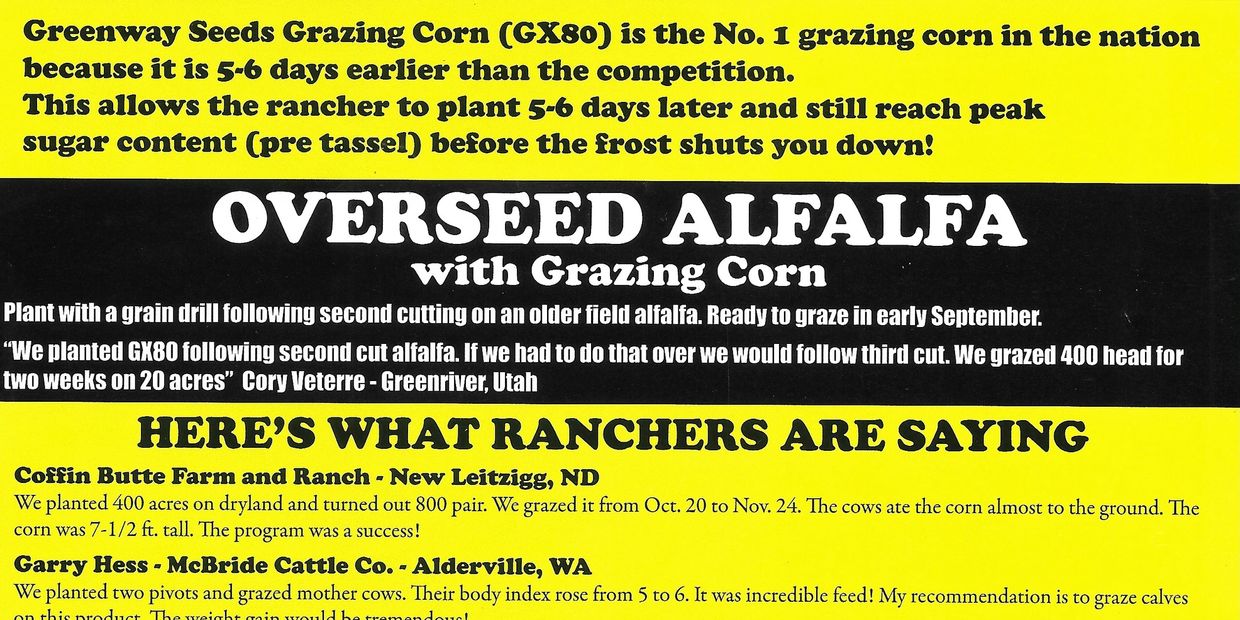
This very early, low lignin/higher digestible variety is at full height at frost time. GX80 is one of the earliest corn varieties on the market (79 days relative maturity).
Think of the expense winter hay stacks you can save by having this resource added to your program. Simply plug up every other hole in your grain drill, drop your cups, and plant one bag per acre.
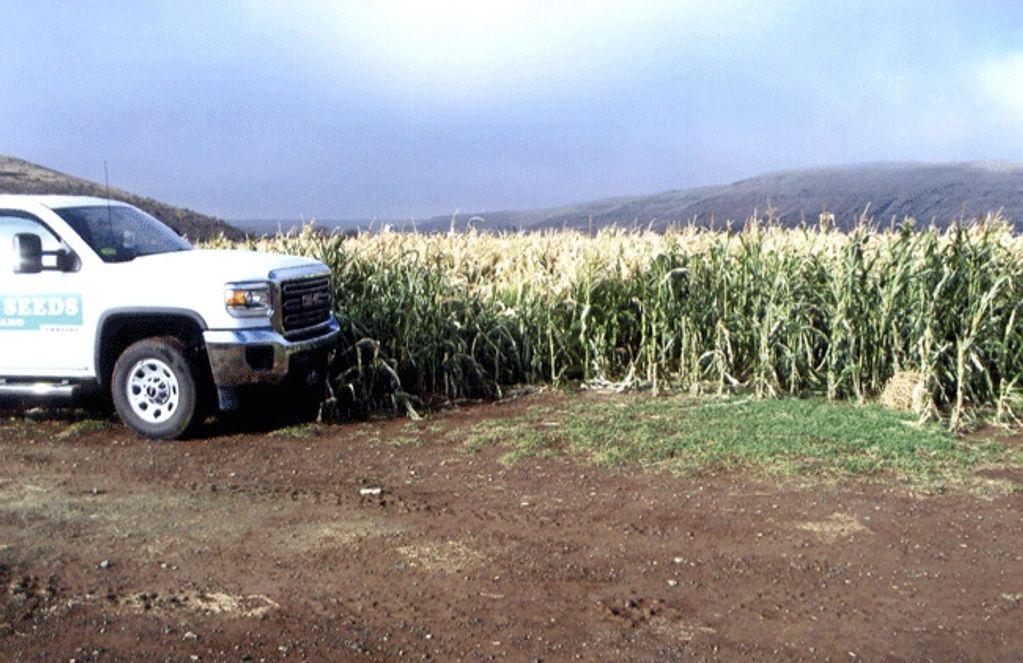
PHOTO TAKEN AT PRICE CATTLE CO. IN ECHO, OREGON. FIELD WAS PLANTED APPROXIMATELY AUGUST 1ST. PICTURE WAS TAKEN EARLY NOVEMBER!
Circle S Cattle Co., Taswell, TN
Planted GX-80 corn into fescue sod. The corn emerged through the sod. The fescue continued it's growth under the corn. Here is a photo of the grass under the corn. They applied 100 lbs. of nitrogen because the fescue would also be a nitrogen user. The corn was 6-7 ft. tall with some places reaching 10 ft. Below is a video of the swathing of the corn/fescue crop.
You can seed inexpensive annual rye grass under your corn, as well.
Circle S Cattle Co., is sure they can triple crop next season with the first planting the end of April, following triticale. The first crop will take slightly less than 60 days, and the next two crops will take 45 days each. One can easily triple crop south of the Mason-Dixon Line. North of the line, one can EASILY double crop, again starting the last week of April.
Check out this great video

We specialize in seed products that no other company produce. Our seed is low water and alkali tolerant. We pride ourselves on great customer service and bring the seed directly to you! I will usually make recommendations only after I look at your ground, listen to your long and stort-term goals, and decide together, how to maximize your cash flow using some of the new genetic technologies. If you have any questions, please do not hesitate to call.
I look forward to helping you achieve your goals!
Sincerely,
Alan Greenway, Seedsman
Greenway Seeds, Caldwell, Idaho
Cell: 208-250-0159